
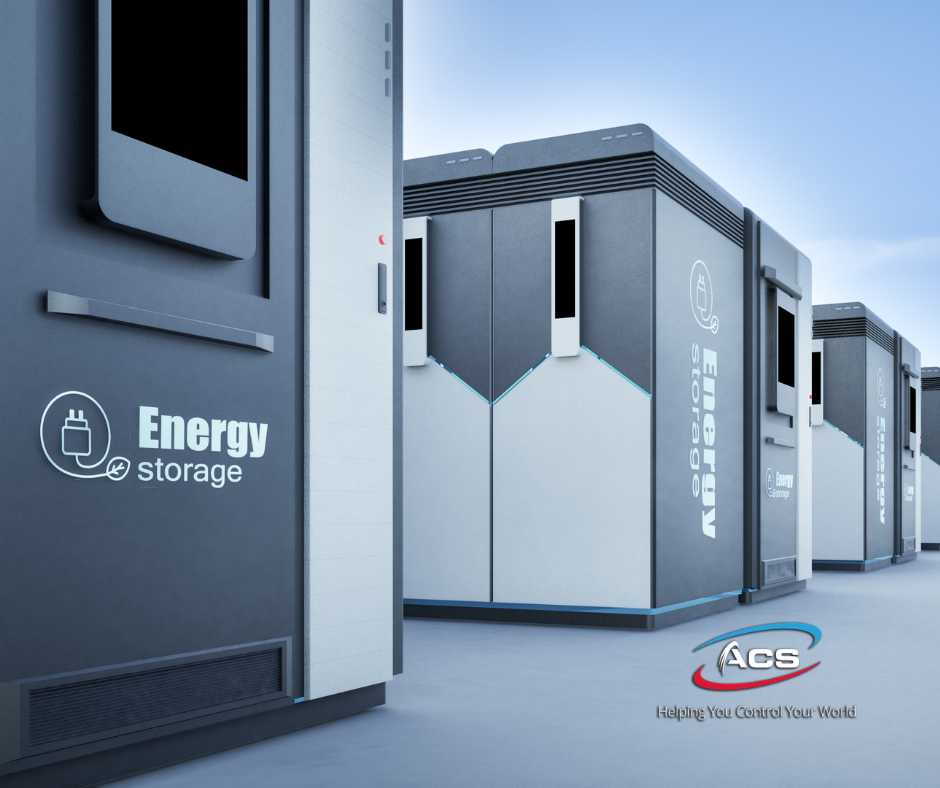
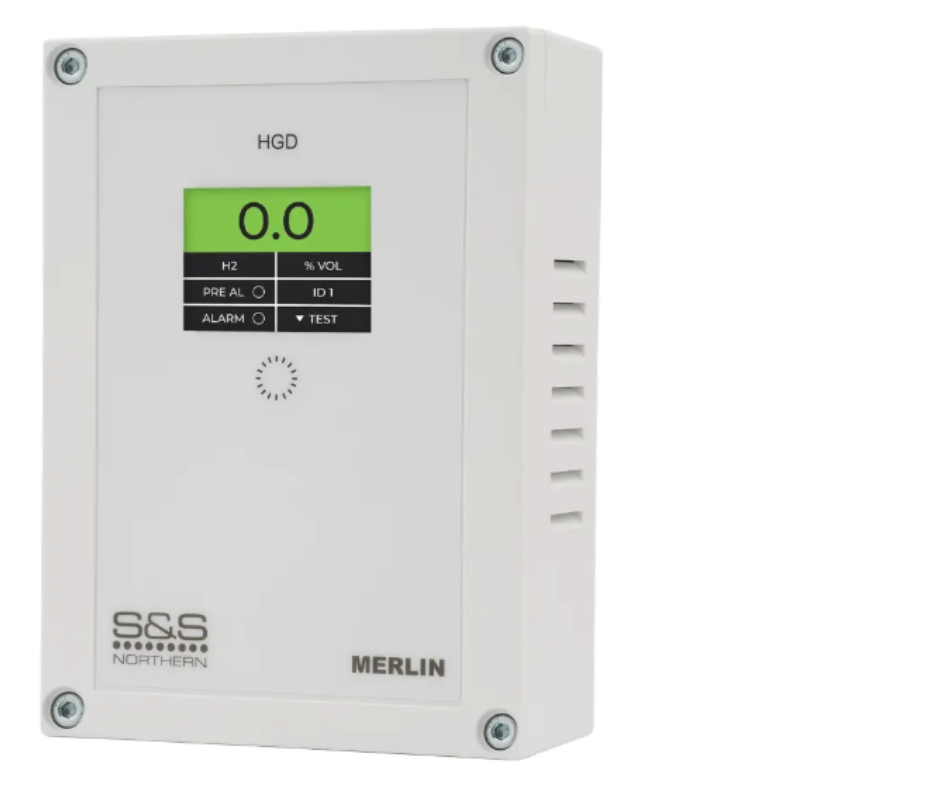
Hydrogen detection has become more critical with the increasing use of large-scale battery storage solutions. Hydrogen generation is an inherent by‑product of electrochemical charging processes in lead‑acid and certain nickel‑based battery systems. Although expected, uncontrolled accumulation can create an explosive atmosphere. Therefore, continuous monitoring is essential in engineered environments. The S&S HGD Series 100 Hydrogen Detector provides a precise, solid‑state sensing platform designed for battery rooms, telecom shelters, and energy‑storage enclosures.
History of S&S
S&S began as a specialist manufacturer of industrial gas‑monitoring equipment. Early products focused on combustible‑gas detection for manufacturing and utilities. Over time, the company expanded into hydrogen‑specific detection as battery‑backup systems became more common in telecom and data‑centre environments.
Development of the HGD Platform
The HGD platform was created to address the unique challenges of hydrogen detection in confined electrical spaces. Successive generations improved sensor stability, reduced drift, and enhanced integration with building‑management systems. The HGD Series 100 represents the latest iteration, offering improved accuracy, robust electronics, and simplified installation.
Hydrogen Generation in Battery Systems
Electrochemical Origin of Hydrogen
During the charging of lead‑acid batteries, water undergoes electrolysis once the cell approaches full charge.This process accelerates when the battery reaches its gassing voltage. Ageing cells, elevated temperatures, and equalisation charging further increase hydrogen evolution. Consequently, hydrogen concentration can rise rapidly in confined spaces.
Contributing Factors
- Overcharging – Excessive voltage drives electrolysis aggressively.
- Thermal conditions – Higher temperatures reduce electrolyte stability.
- Battery degradation – Sulphation and plate wear increase internal resistance.
- Charger behaviour – Float‑charge drift can raise gassing rates.
Because hydrogen is the lightest gas, it migrates to the highest point in an enclosure. However, poor airflow can trap it in stagnant layers.
Hazards Associated with Hydrogen Accumulation
Hydrogen has a Lower Explosive Limit (LEL) of 4% and an Upper Explosive Limit (UEL) of 75% in air. This broad range makes it extremely hazardous. Additionally, its ignition energy is only 0.02 mJ, which is far lower than many industrial gases. Therefore, even minor electrical switching events can ignite it.
Hydrogen flames emit minimal visible light. As a result, ignition may go unnoticed until secondary damage occurs. Battery rooms often contain chargers, relays, and distribution boards, so ignition sources are unavoidable. Continuous detection is therefore a critical engineering control.
Engineering Controls for Hydrogen Prevention
Ventilation Design
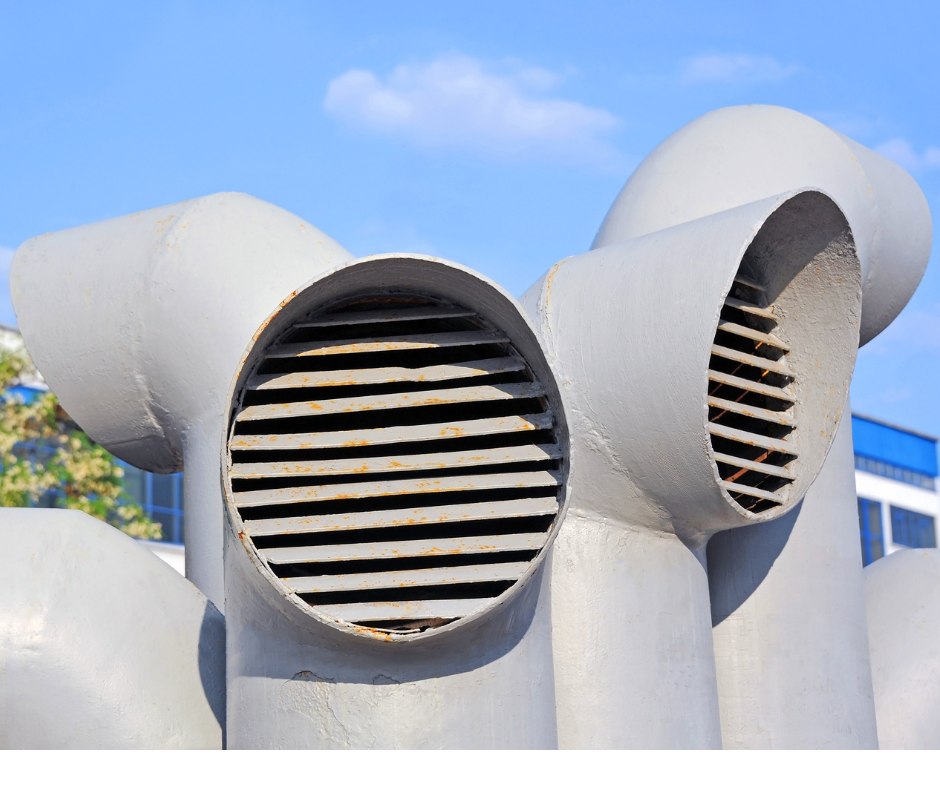
Effective ventilation removes hydrogen before it reaches the LEL. Extraction points must be located near the ceiling. Mechanical ventilation provides predictable airflow, while natural ventilation offers passive redundancy. However, both must be sized according to battery capacity and expected gassing rates.
Monitoring and Automated Response
Hydrogen detection systems provide real‑time concentration data. When integrated with control logic, they can:
- Activate extraction fans
- Trigger alarms
- Shut down chargers
- Notify supervisory systems
These actions reduce risk significantly.
Maintenance and Operational Practices
Technicians should verify electrolyte levels, inspect chargers, and confirm airflow paths. They should also test detectors regularly. These steps ensure that the system remains reliable throughout its operational life.
Technical Operation of the S&S HGD Series 100
Solid‑State Sensing Element
The HGD Series 100 uses a semiconductor‑based hydrogen sensor. Its sensing layer changes resistance when exposed to hydrogen. This resistance shift is converted into an electrical signal proportional to gas concentration. The sensor offers:
- Fast response time
- High sensitivity at low concentrations
- Long‑term stability
- Resistance to contamination
Because the sensor operates at a controlled temperature, it maintains consistent performance across varying environmental conditions.
Signal Processing and Control Logic
The detector’s microcontroller continuously samples the sensor output. It applies filtering algorithms to remove noise and stabilise readings. Thresholds are configurable, allowing the system to trigger:
- Warning alarms at low concentrations
- Critical alarms near the LEL
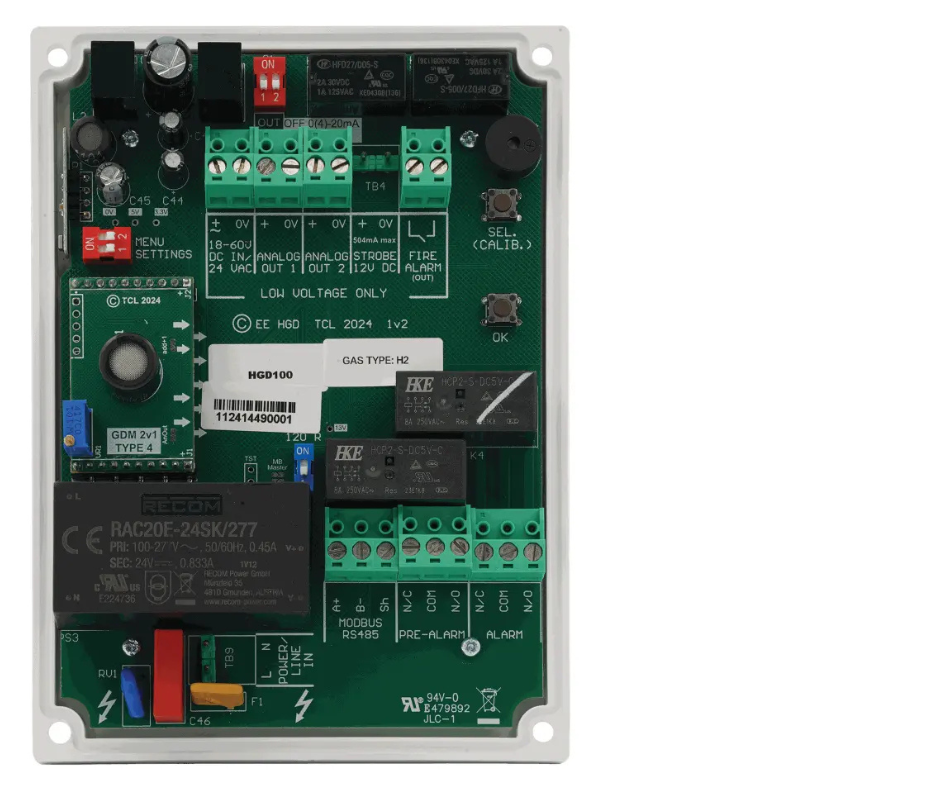
Relay outputs provide dry‑contact switching for external equipment. These relays can activate fans, disconnect chargers, or interface with supervisory control systems.
Power, Installation, and Integration
The unit operates from a low‑voltage DC supply. It mounts near the ceiling, where hydrogen accumulates. Wiring follows standard low‑voltage installation practices. The detector integrates easily with:
- Building Management Systems (BMS)
- SCADA platforms
- Fire‑alarm panels
- Ventilation controllers
Because the device is compact, it fits into telecom shelters, battery cabinets, and industrial enclosures.
Calibration and Lifecycle Considerations
The solid‑state sensor requires minimal calibration. However, periodic testing ensures accuracy. S&S provides calibration tools and procedures. The sensor’s long service life reduces maintenance overhead, which is valuable in remote installations.
Deployment Scenarios
Battery Rooms and UPS Facilities
Large battery banks generate significant hydrogen during charging. The HGD Series 100 provides continuous monitoring and integrates with ventilation systems.
Telecom Shelters
Telecom sites often rely on sealed lead‑acid batteries. Because shelters are compact, hydrogen can accumulate quickly. The detector provides essential protection.
Energy‑Storage Systems
Renewable‑energy storage systems use high‑capacity batteries. Hydrogen monitoring is required for compliance with safety standards. The HGD Series 100 fits easily into these systems.
Laboratories and Industrial Enclosures
Hydrogen appears in research processes and industrial reactions. The detector ensures safe operation and regulatory compliance.
Hydrogen generation is unavoidable in many battery‑based systems. However, accumulation poses severe risks. Effective ventilation, robust maintenance, and precise detection are essential engineering controls. The S&S HGD Series 100 Hydrogen Detector delivers accurate sensing, reliable alarms, and seamless integration with control systems. Its solid‑state sensor, advanced electronics, and flexible installation make it a dependable solution for hydrogen‑monitoring applications.
Automated Control Systems ACS imports and distributes Building Management Systems and associated equipment from the leading suppliers in the world. We are continuously looking for the latest technologies to help our customers maintain and improve their operations.
As such we are excited to bring you the S&S HGD Series 100 Hydrogen Detector. For further enquiries, contact us.