

Greystone Energy Systems has earned a strong reputation for dependable sensing technology across HVAC and building automation. The company’s roots trace back to 1983 as a small engineering group focused on practical instrumentation for commercial buildings. Over time, they expanded their capabilities, refined manufacturing processes, and eventually evolved into the Greystone Energy Systems of today. Because the company maintained a clear focus on accuracy and reliability, it became a trusted supplier for contractors, consultants, and OEMs worldwide.
Today, Greystone’s High Accuracy Product Series represents its most advanced sensing portfolio. These devices support critical environments where tight tolerances, stable readings, and long‑term reliability are essential. They appear in hospitals, laboratories, cleanrooms, data centres, universities, and high‑performance commercial buildings. Moreover, engineers specify them when precise control is required to protect occupants, equipment, and energy performance.
Temperature Sensors
Overview
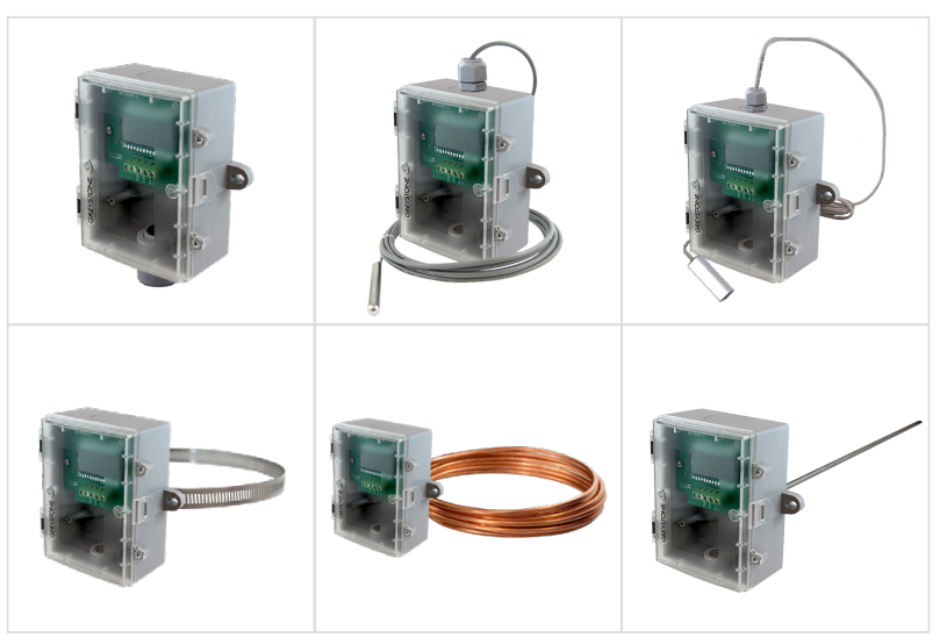
Temperature measurement remains fundamental to HVAC control. It drives heating and cooling decisions, influences setpoints, and supports energy‑efficient operation. Greystone’s high‑accuracy temperature sensors, including the HASPC and HATX series, deliver stable readings across wide operating ranges.
How They Work
These sensors use precision thermistors or platinum RTDs. Thermistors offer fast response and high sensitivity, while RTDs provide excellent linearity and long‑term stability. Because Greystone calibrates each sensing element carefully, the devices maintain accuracy even when ambient conditions shift. Additionally, the housings protect the sensing element from dust, vibration, and moisture.
Where They Are Used
Temperature sensors appear in air‑handling units, fan‑coil systems, hydronic loops, and critical‑environment monitoring. Hospitals and laboratories rely on them because consistent temperature control protects equipment and supports safe operation. Data centres also use them to maintain stable thermal conditions.
Why they are recommended
The HASPC and HATX series stand out due to their tight tolerances, rugged construction, and stable output signals. Furthermore, installers appreciate the straightforward mounting options, which reduce commissioning time. Many models include interchangeable elements, allowing engineers to match sensor type to application without redesigning the system.
Temperature Transmitters
Overview
Temperature transmitters convert raw sensor signals into standardised outputs such as 4–20 mA or 0–10 V. This conversion improves noise immunity and simplifies integration with building management systems. Greystone’s HATD series represents the high‑accuracy transmitter range.
How They Work
Transmitters use internal signal‑conditioning circuits to linearise and amplify the sensor input. Because the electronics are temperature‑compensated, the output remains stable even when ambient conditions change. Shielded enclosures reduce electrical interference, which improves reliability in demanding environments.
Where They Are Used
These devices are common in large commercial buildings, industrial plants, and data centres. Engineers specify them when long cable runs or electrically noisy environments could distort raw sensor signals. They also appear in hydronic systems where stable temperature feedback supports efficient control.
Why they are recommended
The HATD series offers excellent accuracy, low drift, and strong immunity to electrical noise. Moreover, many models include field‑selectable ranges, which give installers flexibility during commissioning. The result is a reliable, repeatable temperature signal that supports precise HVAC control.
Humidity Transmitters
Overview
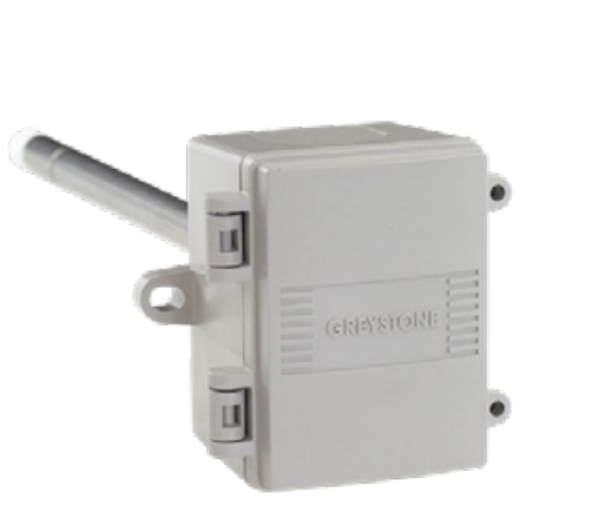
Humidity control is essential for comfort, health, and equipment protection. Greystone’s high‑accuracy humidity transmitters include the HAHS and HAHT series. These devices use advanced polymer capacitive sensing elements that maintain stability over long periods.
How They Work
Humidity sensors measure changes in capacitance caused by moisture absorption. The transmitter converts this change into a proportional output signal. Because the sensing element is factory‑calibrated, the device maintains accuracy even in demanding environments. Many models include temperature compensation, which improves measurement stability.
Where They Are Used
Humidity transmitters appear in offices, schools, museums, and healthcare facilities. They are also common in data centres, where humidity control protects sensitive electronics. Cleanrooms and laboratories rely on them because precise humidity control supports process stability.
Why they are recommended
AHS and HAHT series deliver excellent repeatability, fast response, and long‑term stability. Optional LCD displays help technicians verify readings during commissioning. Additionally, the housings are designed for easy installation, which reduces maintenance time.
Pressure Transmitters
Overview
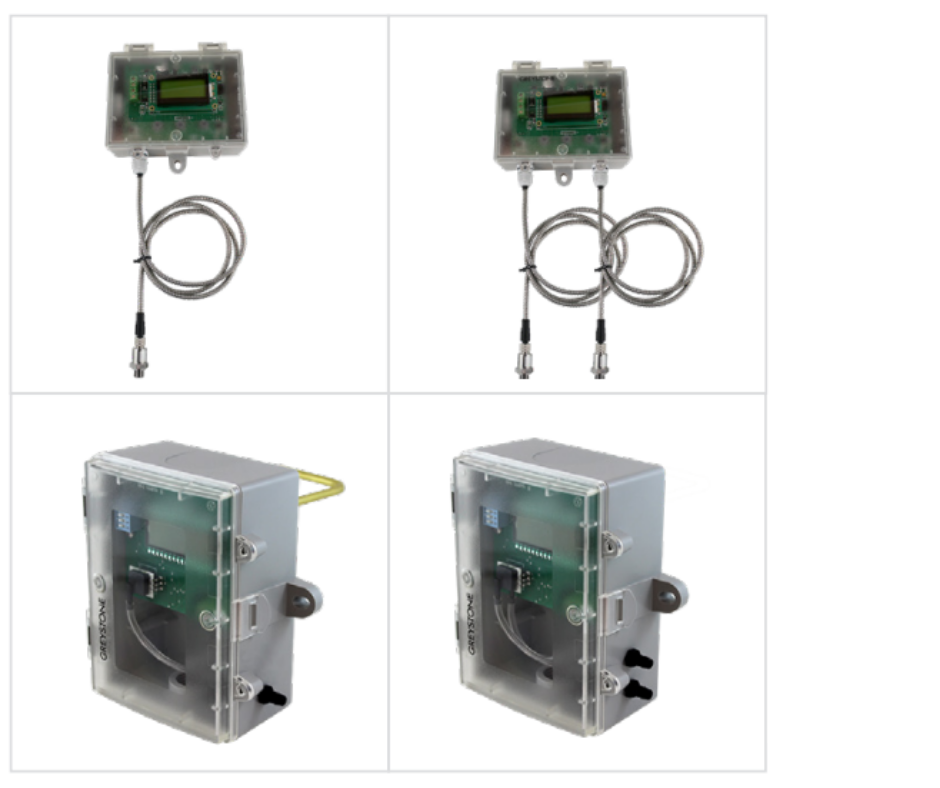
Pressure transmitters support airflow measurement, filter monitoring, duct static pressure control, and hydronic balancing. Greystone’s high‑accuracy pressure portfolio includes the HADP, HAGP, and HALP series.
How They Work
These transmitters use precision piezoresistive sensing elements. The sensor detects changes in electrical resistance across a silicon diaphragm. The transmitter then amplifies and linearises this signal, producing a stable output. Because the sensing element is temperature‑compensated, the device maintains accuracy across a wide operating range.
Where They Are Used
Pressure transmitters appear in VAV systems, AHUs, cleanrooms, and hydronic networks. Engineers rely on them to maintain correct airflow, verify filter condition, and ensure stable pressure relationships between zones. They also support differential pressure monitoring in laboratories and isolation rooms.
Why they are recommended
The HADP, HAGP, and HALP series offer tight accuracy, low hysteresis, and excellent long‑term stability. Many models include jumper‑selectable ranges, which simplify commissioning. Furthermore, rugged housings protect the sensing element from dust and vibration, ensuring reliable operation.
Networking Sensors
Overview
Networking sensors integrate temperature, humidity, and pressure measurement with digital communication protocols. Because modern buildings rely heavily on data, these sensors support advanced control strategies and real‑time monitoring.
How They Work
Networking sensors use onboard microprocessors to collect, process, and transmit data. They support protocols such as Modbus and BACnet, which allow seamless integration with building management systems. Additionally, many models include multiple sensing elements, which reduce installation time and wiring complexity.
Where They Are Used
These sensors are common in smart buildings, data centres, and large commercial facilities. Engineers specify them when centralised monitoring or advanced analytics are required. Because they provide multiple measurements from a single device, they reduce hardware costs and simplify maintenance.
Why they are recommended
Greystone’s networking sensors stand out due to their robust communication capabilities, high measurement accuracy, and flexible configuration options. They support trending, diagnostics, and alarm functions, which help facility teams respond quickly to system changes. Moreover, the devices are designed for long‑term reliability, which reduces lifecycle cost.

Greystone Energy Systems’ High Accuracy Product Series delivers precise, stable, and reliable sensing for demanding HVAC and building automation applications. Because these sensors support tight control tolerances, they help engineers optimise energy use, maintain comfort, and protect critical environments. Furthermore, the company’s long history of engineering excellence ensures that each product meets the needs of modern buildings.
Automated Control Systems continuously seeks out the best in class equipment to ensure that our clients have the best available for their projects. Contact us to find out how we can help you with your HVAC projects and operations.