

Heating, ventilation, and air conditioning (HVAC) systems play a key role in indoor climate control. Among the most energy-efficient HVAC systems is the Variable Air Volume (VAV) system. It delivers air at a constant temperature but varies the airflow based on a room’s thermal load. This flexibility leads to significant energy savings, improved comfort, and lower operating costs.
What is Variable Air Volume?
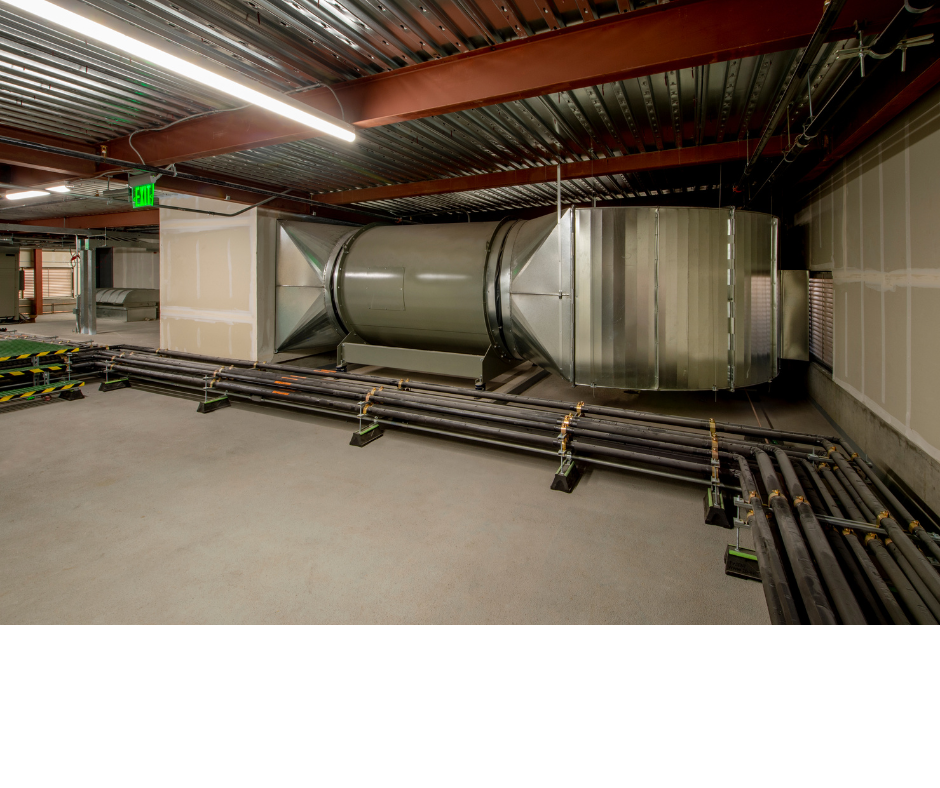
A VAV system regulates the volume of conditioned air delivered to different areas in a building. Unlike constant air volume (CAV) systems, which supply a fixed airflow, VAV systems modulate the air volume. This is done using dampers and controllers that adjust based on real-time temperature or occupancy demands.
Typically, VAV systems consist of central air handling units (AHUs), ductwork, VAV terminal boxes, and zone-level controllers. Each VAV box serves a particular zone and contains a damper controlled by a VAV controller. These controllers receive input from room sensors and adjust damper positions to maintain the desired temperature.
Understanding VAV Controllers
VAV controllers are the heart of a VAV system. They monitor room conditions and send control signals to adjust the damper, fan speed, or reheat elements. These devices interpret sensor data—such as temperature, CO₂, and occupancy—and perform algorithms to modulate airflow.
Key Functions of VAV Controllers
Measure zone temperature.
Control damper positions.
Manage reheat coils when necessary.
Interface with Building Management Systems (BMS)
Allow scheduling and setpoint adjustments.
A modern VAV controller uses digital communication protocols, like BACnet or Modbus, to share data with other systems. This interoperability enables centralised monitoring, trending, and fine-tuning.
Benefits of Using VAV Controllers
The use of VAV controllers offers numerous operational and economic benefits:
Energy Efficiency
VAV systems reduce fan energy consumption by modulating airflow. When less air is needed, the controller reduces the damper opening, decreasing static pressure and fan energy use.
Zone-Based Comfort
Each zone can be controlled independently. This ensures occupant comfort across spaces with different loads, such as sunlit offices and interior conference rooms.
Scalability and Integration
Controllers are often compatible with larger building automation systems (BAS), enabling system-wide management and analytics.
Reduced Operating Costs
Efficient air delivery, smart scheduling, and optimal reheating lead to lower utility bills and reduced maintenance requirements.
Better Indoor Air Quality (IAQ)
Some controllers support demand-controlled ventilation (DCV), adjusting airflow based on occupancy or CO₂ levels, which enhances IAQ while saving energy.
The iSMA CONTROLLI VAV14-IP Controller
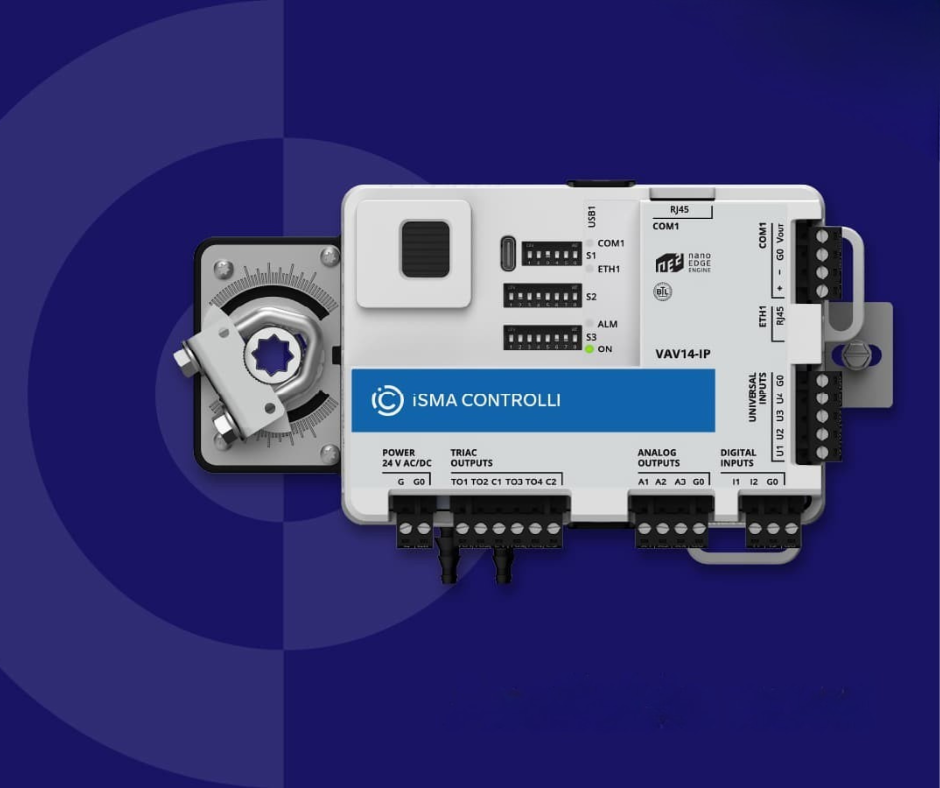
Among the advanced VAV controllers available today is the iSMA CONTROLLI VAV14-IP. Designed for precise airflow and zone control, this controller brings together high performance, flexibility, and seamless integration.
Overview
The VAV14-IP is a fully programmable VAV controller with an integrated IP interface. It supports BACnet/IP and Modbus TCP communication protocols, ensuring compatibility with various BMS platforms. Its onboard I/O modules and compact design allow direct installation into VAV boxes without additional hardware.
Technical Features
16-bit precision on all analogue inputs
14 I/O points: 5 UI, 5 DI, 2 AO, 2 DO
Native BACnet/IP and Modbus TCP support
Built-in PID control algorithms
Web-based configuration via IP
DIN-rail mountable and compact footprint
Benefits of Using VAV14-IP
The VAV14-IP offers several advantages for installers, facility managers, and building owners:
Quick Configuration and Commissioning
With its web-based interface, technicians can set up and configure the controller remotely. This reduces commissioning time and costs.
High Integration Capabilities
Thanks to BACnet/IP support, the VAV14-IP integrates easily into existing BAS networks. This makes it ideal for retrofits and new projects alike.
Precise Airflow Control
Using accurate sensors and proven control logic, the VAV14-IP maintains stable zone temperatures even under varying load conditions.
Programmability
Users can create custom control strategies using Sedona Framework, giving flexibility for complex HVAC applications
Scalable Design
Whether managing a single floor or an entire building, the VAV14-IP adapts to any scale, making future expansions seamless.
Applications in Modern Buildings
VAV systems are widely used in commercial buildings, hospitals, airports, and universities. Their flexibility makes them ideal for spaces with variable occupancy patterns. Each VAV controller serves an individual zone, ensuring fine-grained control and energy efficiency.
With controllers like the VAV14-IP, facility managers can monitor performance metrics in real-time. They can also receive alerts and perform remote diagnostics. These capabilities enhance operational efficiency and reduce downtime.
Best Practices for VAV Implementation
To maximise the benefits of a VAV system, proper design, installation, and maintenance are essential.
Design Tips
Ensure that each zone has distinct thermal characteristics.
Size VAV boxes and ductwork correctly.
Integrate occupancy sensors for demand-based control.
Installation Tips
Calibrate all sensors accurately.
Test damper actuators during commissioning.
Label and document all control wiring.
Maintenance Tips
Periodically check sensor drift.
Clean dampers and actuators to avoid airflow obstructions.
Update controller firmware when needed.

Variable Air Volume systems represent a smart, efficient way to manage indoor air distribution. When paired with modern controllers like the iSMA CONTROLLI VAV14-IP, they provide unmatched flexibility, precision, and energy savings. In today’s energy-conscious world, adopting advanced VAV systems is not only a wise investment but also a step towards sustainable building operations.
By leveraging intelligent zone control, remote access, and integration capabilities, the VAV14-IP stands out as a reliable solution for modern HVAC demands. Whether you are an engineer, facility manager, or system integrator, understanding the potential of VAV systems—and implementing them correctly—can lead to long-term benefits for both building occupants and owners.
ACS a project partners to the HVAC industry has a wealth of knowledge and experience in this field. We ensure that we have the expertise and can supply equipment from world-wide best-in class suppliers such as iSMA Controlli and the new VAV14-IP is a fully programmable VAV controller.