
UL certification provides independent verification that a product has been evaluated against recognised safety standards. In addition, it demonstrates that manufacturing processes are subject to ongoing compliance oversight. Within HVAC and building automation applications, this independent assessment can help reduce specification risk while supporting project compliance objectives. The performance of an HVAC system depends on far more than equipment selection. Sensors, transmitters, switches and control devices form the foundation of modern building automation systems and directly influence energy efficiency, occupant comfort and operational reliability. Consequently, component quality and compliance have become increasingly important specification criteria.
As buildings become more connected, engineers must evaluate products not only for functionality but also for safety, manufacturing consistency and regulatory compliance. For this reason, many consultants and system integrators specify UL certified products within critical control and monitoring applications.
What Is UL Certification?
UL certification is a third-party conformity assessment process administered by UL Solutions. It verifies that a product complies with applicable safety requirements and technical standards relevant to its intended application. Products that satisfy these requirements are authorised to bear the UL Mark.
Unlike manufacturer self-declaration, UL certification requires independent evaluation. Depending on the product category, the assessment may include electrical safety testing, construction review, environmental testing, flammability assessment and fault-condition analysis. Furthermore, certification programmes typically include ongoing factory surveillance to verify continued compliance with the certified design.
For HVAC products, UL certification provides evidence that a device has been assessed by an independent authority using recognised testing methodologies. As a result, the certification assists consultants, contractors and building owners in evaluating product suitability and compliance.
UL Solutions: More Than 130 Years of Safety Science
UL Solutions traces its origins to 1894 when electrical engineer William Henry Merrill established Underwriters Laboratories to address growing concerns surrounding electrical safety. As electrification expanded throughout North America, demand increased for objective product testing and safety verification.
Today, UL Solutions operates as a global safety science organisation providing testing, inspection, validation and certification services across multiple industries. Its services support manufacturers in more than 110 countries and cover sectors ranging from industrial automation and renewable energy to building technologies and smart infrastructure.
The UL Mark remains one of the most widely recognised conformity marks in the world. Consequently, it is frequently referenced within engineering specifications, procurement frameworks and regulatory approval processes.
Greystone Energy Systems: A Specialist in HVAC Sensing Technologies
Greystone Energy Systems Inc. is a Canadian manufacturer focused on sensing and control technologies for commercial, institutional and industrial buildings. The company’s portfolio includes temperature sensors, humidity sensors, pressure transmitters, air quality instrumentation, current switches and network-enabled monitoring devices.
The organisation has built its reputation through the development of products designed specifically for building automation applications. Many product families support open integration strategies, enabling deployment within a wide range of Building Management Systems (BMS) and Building Automation Systems (BAS).
This focus on measurement accuracy, system interoperability and long-term reliability has made Greystone products a common choice within HVAC control architectures where sensor performance directly affects system efficiency and operational stability.
Why Greystone Pursues UL Certification
For manufacturers operating within regulated building services markets, certification is increasingly a design and commercial requirement rather than a differentiator. Greystone’s investment in UL certification reflects this reality.
UL certification validates compliance with recognised safety requirements while reinforcing market confidence in product quality and reliability. The certification process provides independent verification of product performance and demonstrates conformity with established standards.
From a specification perspective, certification reduces uncertainty during product selection. Consulting engineers routinely specify independently certified products to support compliance objectives and reduce project risk. Therefore, UL certification provides an additional level of assurance throughout design, procurement and commissioning stages.
Certification also supports quality management objectives. Because UL programmes include ongoing manufacturing surveillance, certified products benefit from a structured framework that promotes production consistency and traceability.
Greystone UL-Certified Products
Greystone has expanded UL certification across several key HVAC product categories. These certifications cover critical environmental sensing technologies used within commercial building control systems.
Temperature Sensors
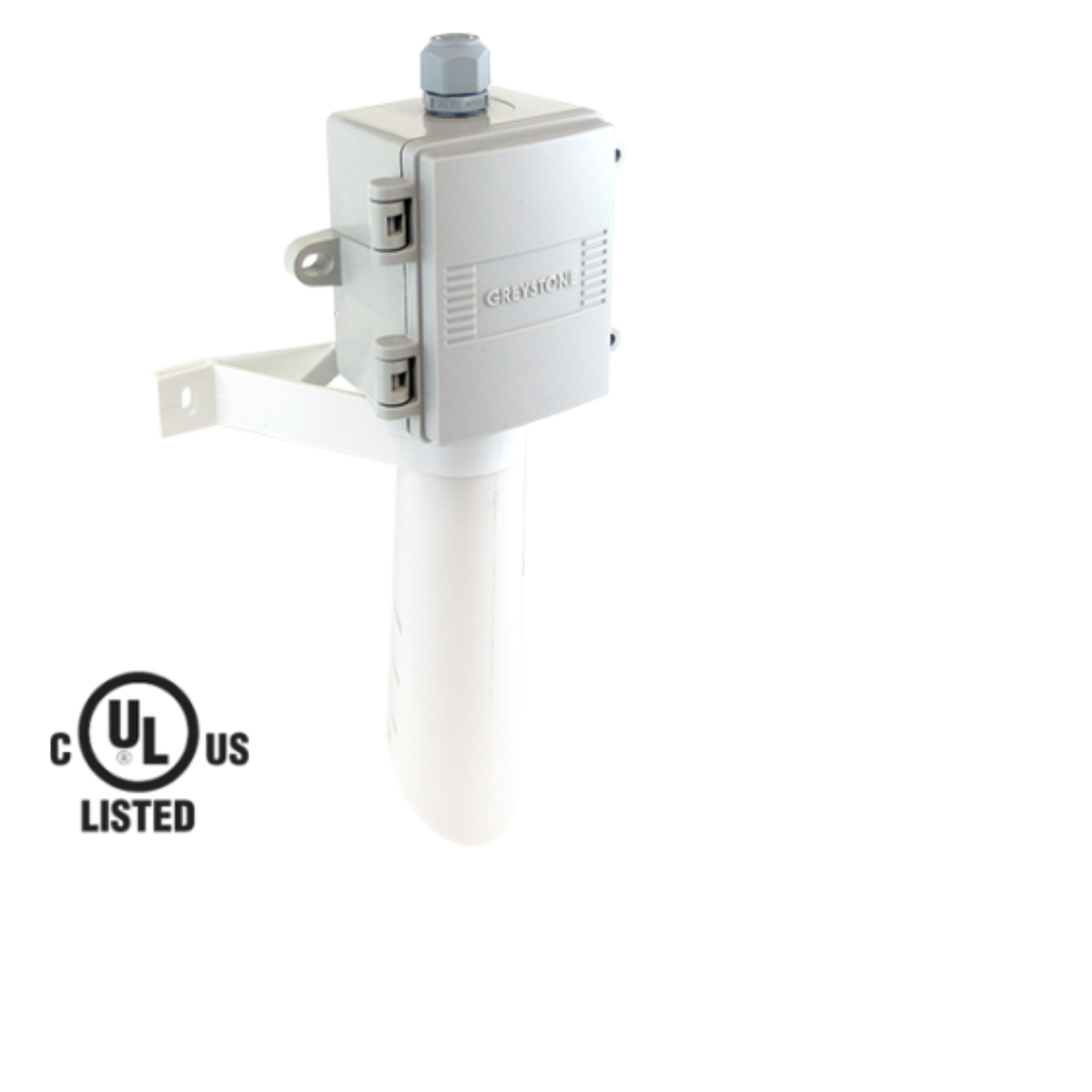
UL-certified temperature sensing products include:
- TS Series Probe Temperature Passive Sensors
- TN Series Probe Temperature Network Sensors
- TX Series Probe Temperature Transmitter Sensors
- HATS Series High Accuracy Probe Temperature Passive Sensors
- HATX Series High Accuracy Probe Temperature Transmitter Sensors
These products support applications including supply-air monitoring, return-air measurement, hydronic system control, plant optimisation and process temperature monitoring.
Humidity Sensors
Greystone’s certified humidity sensing portfolio includes:
- HS Series Duct and Outdoor Humidity Sensors
- HAHS Series High Accuracy Duct and Outdoor Humidity Sensors
- HN Series Network Humidity Sensors
Accurate humidity measurement remains critical for indoor air quality management, condensation prevention and demand-based HVAC control strategies.
Engineering Benefits of UL Certified HVAC Products
Reduced Specification Risk
Independent certification provides objective evidence that a product has been evaluated against recognised requirements. Consequently, specifiers can reduce the risks associated with product selection and compliance verification.
Improved Compliance Assurance
Many commercial projects require conformity with specific codes, standards or client procurement requirements. UL-certified products provide documented evidence of third-party assessment, simplifying compliance reviews and approval procedures.
Manufacturing Consistency
Certification extends beyond initial testing. Ongoing factory inspections help verify that production units remain consistent with the certified design. This process provides additional confidence in product quality and repeatability.
Enhanced Safety Verification
Although HVAC sensors typically operate as low-power devices, they often form part of larger electrical and control systems. Independent safety assessment helps ensure that products have been evaluated for foreseeable operating and fault conditions.
Greater Acceptance Across Project Stakeholders
Consultants, contractors, commissioning authorities and facility operators recognise the UL Mark as an established indicator of product compliance. Consequently, certified products often move through specification and approval processes more efficiently.
Why UL Certification Matters in Modern Building Automation
Building automation systems continue to evolve as facilities adopt digitalisation, predictive maintenance strategies and advanced energy management programmes. These developments increase reliance on accurate sensing, dependable communications and robust control infrastructure.
Sensor performance directly affects operational decisions throughout a building. Therefore, confidence in the devices generating that data is essential. UL certification provides an independent mechanism for validating safety and manufacturing quality while supporting broader project risk-management objectives.
As a result, UL-certified products have become an increasingly important component within high-performance HVAC and smart-building environments.
UL certification remains one of the most recognised indicators of product safety and compliance within the HVAC industry. By combining independent testing with ongoing manufacturing oversight, UL Solutions provides a rigorous framework for evaluating product integrity and reliability. For consulting engineers, controls specialists and system integrators, UL certified products offer more than a recognised certification mark. They provide an additional layer of assurance regarding safety, consistency and specification compliance within increasingly sophisticated building automation systems.
Automated Control Solutions (ACS) is an importer and distributor of Building Management Systems and HVAC equipment. We understand that our customers want the latest technologies, which is why we partner with innovative, dynamic companies such as Greystone Energy Systems to ensure that our clients have access to the best in class equipment for their projects. Contact us.